

























































A fresh ranking of Houston’s industrial muscle just dropped, and it puts hard numbers behind what many locals already feel in traffic, payrolls and property values. The new rundown of 100 manufacturers sprawled across the metro area shows an economy powered by everything from petrochemicals and heavy fabrication to pharmaceuticals, semiconductors and space-age hardware. Together, the firms on the list support tens of thousands of jobs and billions in output, a not-so-subtle reminder that factory floors still shape hiring and public planning across the region.
According to the Houston Business Journal, the ranking profiles 100 manufacturing companies in total, with 20 featured in the print edition and another 80 included in an expanded digital list. The Journal ranked firms by number of local employees and limited entries to those with operations in Austin, Brazoria, Chambers, Fort Bend, Galveston, Harris, Liberty, Montgomery, San Jacinto and Waller counties. Editors described the project as part of a shift toward more data-driven local reporting that can be sliced by headcount and geography.
Manufacturing’s punch in that local data is hard to miss. According to the Greater Houston Partnership, the sector generated roughly $126.9 billion in metro output in 2024, about 16.7 percent of Houston’s GDP. That share puts the region at the top nationally by manufacturing output. The Partnership notes that new project announcements in 2024 to 2025 run the gamut from computer hardware and pharmaceuticals to energy-transition investments, widening the menu of factory work coming into town and shifting where those jobs land on the map and what skills employers are hunting for.
One headline example is Eli Lilly’s planned active pharmaceutical ingredient facility at Generation Park in northeast Houston, a bet the company has put at $6.5 billion. In a company release, Eli Lilly said the site is expected to support about 615 permanent manufacturing positions and roughly 4,000 construction jobs while producing active pharmaceutical ingredients for small-molecule medicines. Local economic filings and development officials point to the project as a potential magnet for suppliers, training partnerships and additional life-sciences investment clustering around Generation Park.
Major Names On The Roster
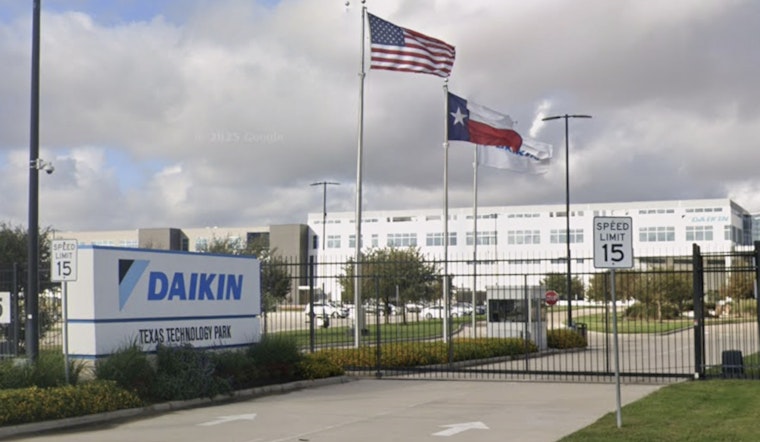
The Business Journal’s list blends marquee brands with specialized operators: energy heavyweights, aerospace contractors and newer arrivals in pharmaceuticals and advanced batteries. Local and industry coverage has called out a few standouts, including Daikin’s Texas Technology Park, Hewlett Packard Enterprise, ExxonMobil and Tesla’s Megapack manufacturing plans, along with service-tech firms tied to the energy sector. Reporting by outlets such as Built In and the Houston Chronicle highlights how both sprawling plants and corporate campuses translate into big local headcounts.
What It Means For Jobs And Neighborhoods
Big plant commitments do not just pad corporate earnings, they reset job postings. The current wave of projects is fueling demand for certified technicians, lab staff and maintenance crews, and local colleges are already angling to be the go-to talent pipeline. As Community Impact reported, Generation Park’s biotech infrastructure and San Jacinto College’s Center for Biotechnology were both cited in Eli Lilly’s site selection. The filings tied to the project forecast hundreds of steady manufacturing jobs and thousands of construction roles.
Stack on top of that the likely arrival of supplier campuses and more shipping activity, and nearby neighborhoods are staring at a fresh round of questions about housing, traffic and how to make workforce housing keep pace without getting priced out.
What To Watch
With more steel in the ground comes more scrutiny. Regulatory oversight and industrial safety are expected to stay front and center as facilities scale up, particularly along the Ship Channel and other chemical corridors that already carry heavy risk. Industry trackers such as Global Safety Briefing have recently logged process upsets and other incidents that underline the need for continued investment in safety systems and emissions controls. How companies and regulators respond to those warning shots will help decide whether this manufacturing buildout becomes a long-term win for workers and communities or a new flashpoint over land use and environmental impacts.
The full ranking, including company headcounts and county-level breakdowns, is available to subscribers of the Houston Business Journal. For anyone trying to track Houston’s industrial evolution in real time, the list doubles as an early field guide to where jobs, training programs and neighborhood impacts are likely to cluster in 2026 and the years just behind it.





